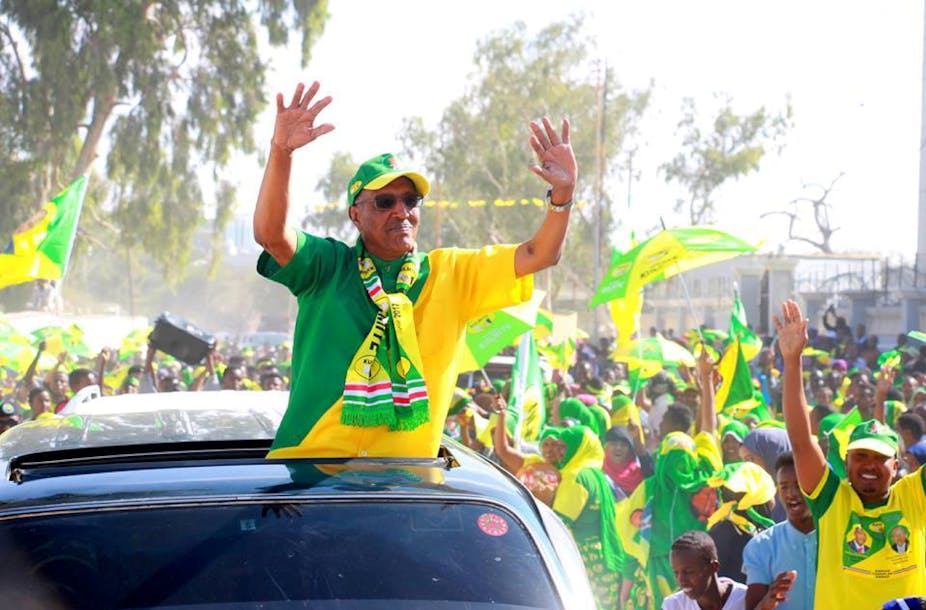
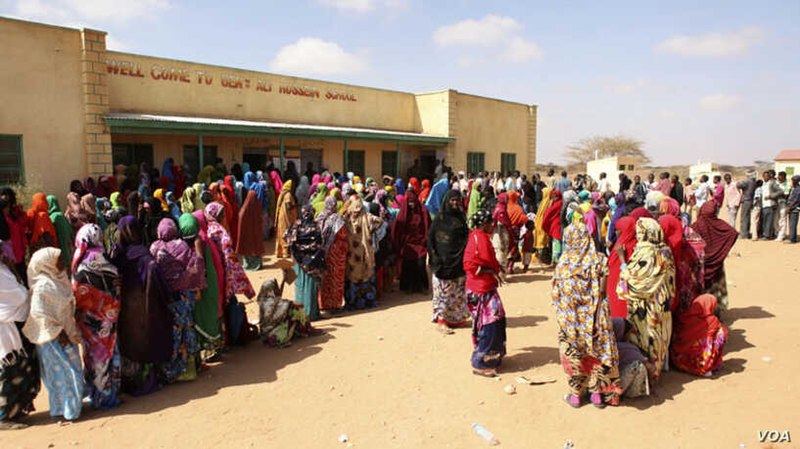
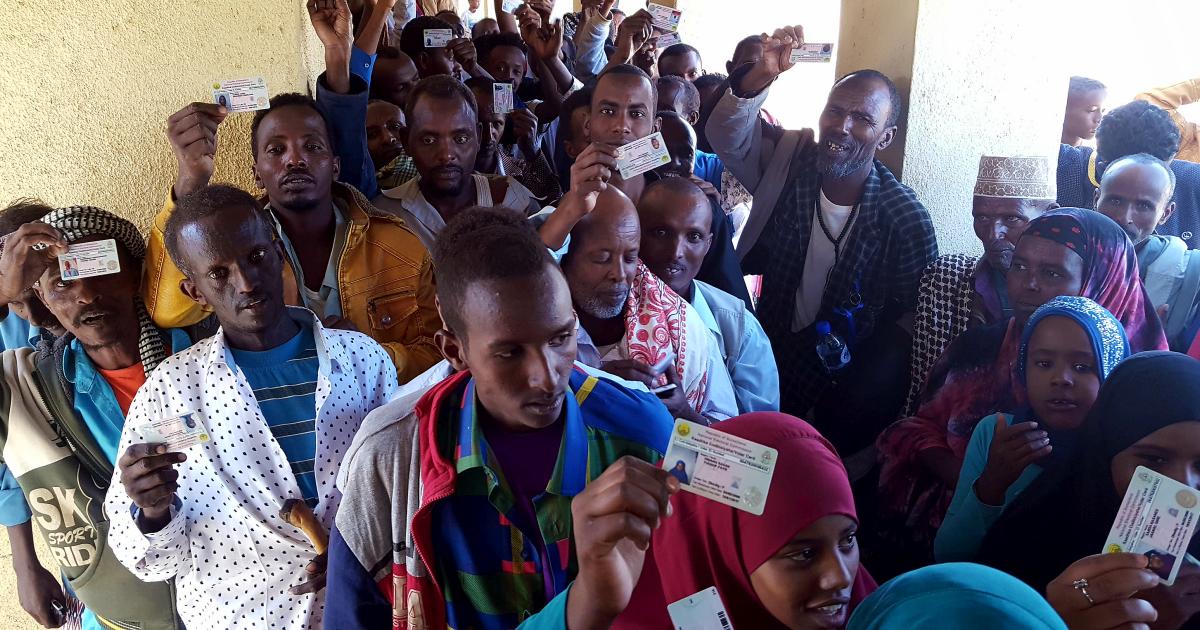
Municipal elections were held across Somaliland on 15 December 2002. Six political associations fielded 2,368 candidates to contest 379 local council seats in nineteen of Somaliland's twenty-three electoral districts.
Prior to these elections, local government only consisted of a mayor and a councillor both appointed by the Ministry of Interior by the recommendation of the President. These elections would pave way for the establishment of popularly-elected local governments that were directly responsible to local constituencies.
Political associations
The Constitution of Somaliland stipulated that only three political parties could exist at any one time. As a result, the three associations that gained the largest numbers of local council seats would become the official political parties and enjoyed exclusive legitimacy for the next ten years. A political organisation had to achieve 20% of the vote in at least four of Somaliland's six regions in order to become a national party and contest presidential and parliamentary elections.
The contenders that took part in this process included:
- United Peoples' Democratic Party (UDUB) led by President Dahir Riyale Kahin
- Peace, Unity, and Development Party (Kulmiye) headed by Ahmed Mohamed Mohamoud
- For Justice and Development (UCID) led by Faysal Ali Warabe
- Sahan led by Dr Mohamed Abdi Gaboose
- Asad led by Suleiman Mohamoud Adan
- Hormood led by Umar Ghalib
Results
Over 440,000 people took part in the country's first municipal elections. Results were announced a week later by the National Electoral Commission, with UDUB, Kulmiye and UCID finishing as the top three parties.
Aftermath
The elections were viewed largely as a success and was an essential step in the transition from a clan-based formed of governance to a democracy.
Political associations that ranked fourth or lower ceased to exist. Although Sahan passed the threshold of receiving 20% of the votes in at least four regions and UCID did not, it was decided that UCID's higher national vote share qualified it to become the third party, a controversial decision.
Councillors from the associations that were dissolved were subsequently required to join one of the newly appointed national parties, UDUB, Kulmiye or UCID.
References

![SOMALILAND PRESIDENTIAL ELECTIONS DATA BASE [200320102017]](https://media.licdn.com/dms/image/C4D12AQF0A6l1VicJPw/article-cover_image-shrink_720_1280/0/1520182613609?e=2147483647&v=beta&t=JxwvZYPQZhusDwlz5xRrpUFX4driGOoOTKymfMoog-U)